
For UK retailers, online brands, hotel groups and wholesalers building a mattress range under their own name.
Search for a mattress manufacturer in the UK and you will find heritage bed makers, stockist locators and a trade association directory. That helps if you want to sell someone else’s brand. It does not tell you how to put your own name on a mattress, what it will cost to land, or how to prove it meets UK fire rules.
The short answer: a private label mattress manufacturer builds a mattress to your specification and ships it under your brand. For the UK, judge a manufacturer on three things: fire test evidence that matches your exact construction, correct UK sizing and labelling, and a landed cost that still leaves margin after freight and testing.
Three Ways to Source Mattresses for the UK Market
Each route suits a different business. Pick the one that matches your brand promise before you compare prices.
| Route | Best Fit | What You Get | What You Give Up |
|---|---|---|---|
| Stock a British-made brand | Showroom retailers selling heritage and craft | An established name and retailer support | Brand ownership. The range and its story stay with the maker |
| Own label from a UK factory | Brands that need a UK-made claim or NBF Brand Associate status | Local supply and a Made in Britain story | Pricing and minimums vary by factory, so ask each one directly |
| Overseas private label OEM | Own brands, roll-packed online ranges and container-volume buyers | Control of the specification and direct factory pricing | Any UK-made claim. You also take on ocean lead times and importer checks |
If your brand promise is Made in Britain, an overseas factory is the wrong choice, and that includes KaneMan. The same applies if you want the NBF logo. NBF rules require full manufacturer members to have a UK or Irish facility and make at least 70% of their products in the UK, while Brand Associates must have every mattress made by NBF Approved members.
If your priority is owning the brand, the specification and the margin, the rest of this guide is for you.
The Risk UK Buyers InheritWhat the Project Phoenix Test Means for Imported Mattresses
In May 2026, the National Bed Federation and the European Bedding Industries Association published Project Phoenix. They bought 101 mattresses from online marketplaces and traditional retailers, with UK single prices from £47 to £450, and had them tested by accredited laboratories.
The headline finding: 65% of the imported mattresses from outside the UK and EU failed the required fire safety standards and carried inaccurate or misleading claims. Some products also raised concerns over foam fillings and missing textile fibre labels. The results went to government regulators.
These bodies represent UK and European bed makers, so read the study with that in mind. It still changes your sales conversation. Retail buyers and hotel procurement teams now have a reason to ask every imported range for proof.
The checks are not one-off either. Under its Due Diligence Testing Programme, the NBF buys member and non-member products on the open market, runs flammability tests, cuts them open and compares the contents with the marketing claims. Serious findings may go to trading standards.
If overlooked: your brand is the name on the mattress, so a failed test lands on you rather than on the factory. Since 30 October 2025, the window for bringing proceedings under the furniture fire regulations has doubled from six to 12 months.
Match the Hazard Category to Where the Mattress Will Be Used
Two requirements work together. Fillings must meet the Furniture and Furnishings (Fire) (Safety) Regulations 1988, and the complete mattress must be safe under product safety law, which is demonstrated through BS 7177. The hazard category sets the test level.
| BS 7177 Category | Typical Premises | Ignition Sources |
|---|---|---|
| Low hazard | Homes and non-motorised caravans | Smouldering cigarette (EN 597-1) and match flame equivalent (EN 597-2) |
| Medium hazard | Hotels, hostels, university halls, boarding schools, hospitals, residential care | As above, plus Source 5 under BS 6807, widely called Crib 5 |
| High hazard | Certain hospital wards, hostels, hotels and offshore installations | As above, with Source 7 under BS 6807 |
| Very high hazard | Prison cells and locked psychiatric accommodation | Source 7, plus any extra requirements set by the specifier |
For non-domestic sites, the final category comes from a risk assessment, so confirm it with the operator before sampling.
Foam Layers Count Individually
Any foam inside a composite filling must also meet the single foam requirement.
If overlooked: a finished mattress can look compliant while one inner layer is not.
Both Sleeping Faces May Need Testing
If a mattress has two usable faces with different ticking or fillings, both are tested. Identical faces are exempt.
If overlooked: a winter and summer design is only half covered by its report.
Reports Follow the Construction
Tests target surface features such as tufting, quilt lines and tape edges, using a sample that replicates the make-up of the mattress.
If overlooked: a report for another model tells you little about yours.
Compliance Continues After Launch
BS 7177 sets repeat testing linked to volume, such as one unit every six months below 400 units a month, and requires the correct label. Toppers are treated like mattresses.
If overlooked: a clean first report ages out while production carries on.
The rules are moving. The 2025 amendment removed the swing label requirement but kept the permanent label. It also took baby and child mattresses under 170 cm by 75 cm out of those regulations and placed them under general product safety law. The OPSS consulted on wider reform until June 2026, so check the current position before each new order.
Before You Pay a DepositSeven Things to Ask Any Mattress Manufacturer For
Use this list with every factory, including us. A serious supplier will expect these questions.
- The full BS 7177 test report. Ask for the whole document at your hazard level, not a certificate image. Confirm the laboratory’s accreditation. The NBF publishes a list of UKAS accredited testing houses.
- A construction match sheet. Line up every layer, ticking, quilt pattern and tape edge against the sample in the report.
- Filling evidence. Request results for each foam, latex and fibre layer used in your mattress.
- Label artwork. Check the BS 7177 label wording against your hazard category, and include the textile fibre composition label.
- A repeat testing plan. Agree who tests, how often, at what volume and who pays.
- A claims file. Back every spring count, foam density and material claim with evidence, because your mattress may be cut open.
- Chemical information. Ask what treatments are used. NBF checks include enquiries under REACH and Biocides rules.
If overlooked: the cheapest quote can become the most expensive one. A low price with no matching evidence leaves testing, rework and stock risk with you after the deposit has gone.
Which Private Label Mattress Fits Your UK Channel
Start from where the mattress will be sold, then choose the construction.
Online Mattress Brands
Best fit: memory foam or hybrid, compressed and boxed.
Ask how the mattress recovers after compression, as that shapes first-night reviews and returns.
Furniture and Bed Retailers
Best fit: pocket spring and hybrid ranges priced for your floor.
Repeat orders must feel like the mattress on display, so agree batch tolerances early.
Hotels, Halls and Care Operators
Best fit: spring or foam specified from the required hazard category.
Set the category before you sample, as a domestic specification cannot simply be relabelled as contract.
Wholesalers and Value Ranges
Best fit: high-density foam and spring mattresses at container-load quantities.
Model the full container rather than the unit price.
Build to UK sizes from the first sample: Small Single 75 x 190 cm, Single 90 x 190 cm, Small Double 120 x 190 cm, Double 135 x 190 cm, King 150 x 200 cm and Super King 180 x 200 cm. Some brands make Super Kings at 182 cm, so check the frames your customers use. A UK King is narrower than the common European 160 cm width.
 How KaneMan Fits
What a UK Private Label Buyer Gets from KaneMan
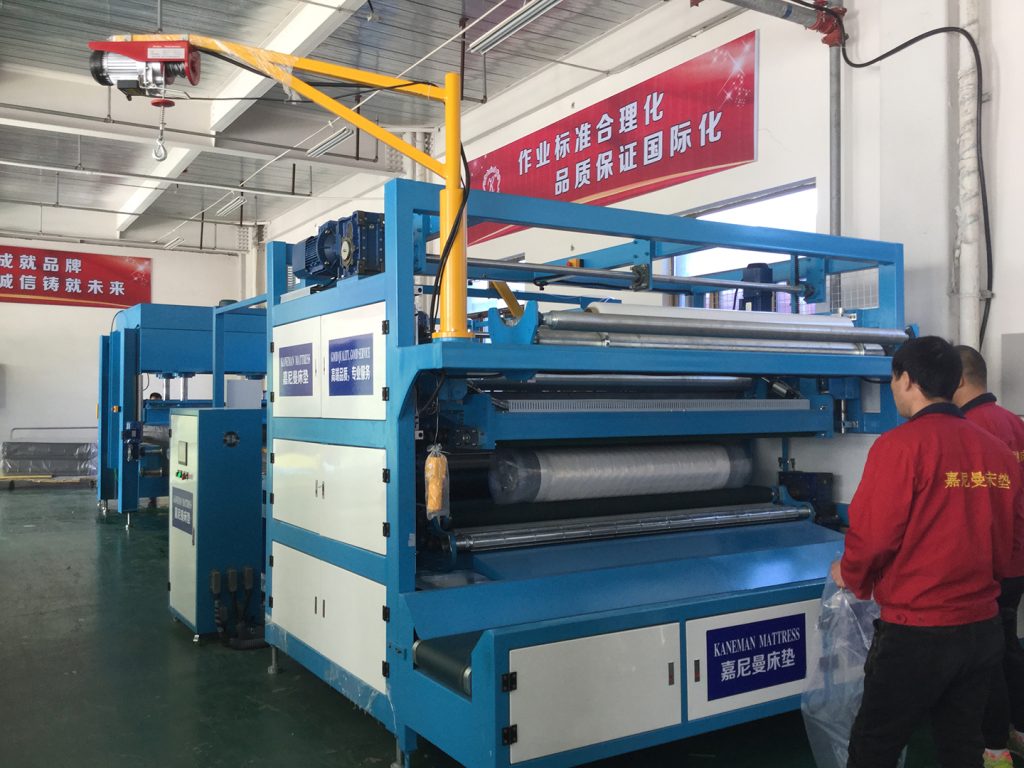
KaneMan is an export mattress factory based in China, not a UK maker. Here is what that means for your range.
| What You Need | What KaneMan Provides |
|---|---|
| A first order without a full-range commitment | Custom spring mattresses from 100 units, with your firmness and size |
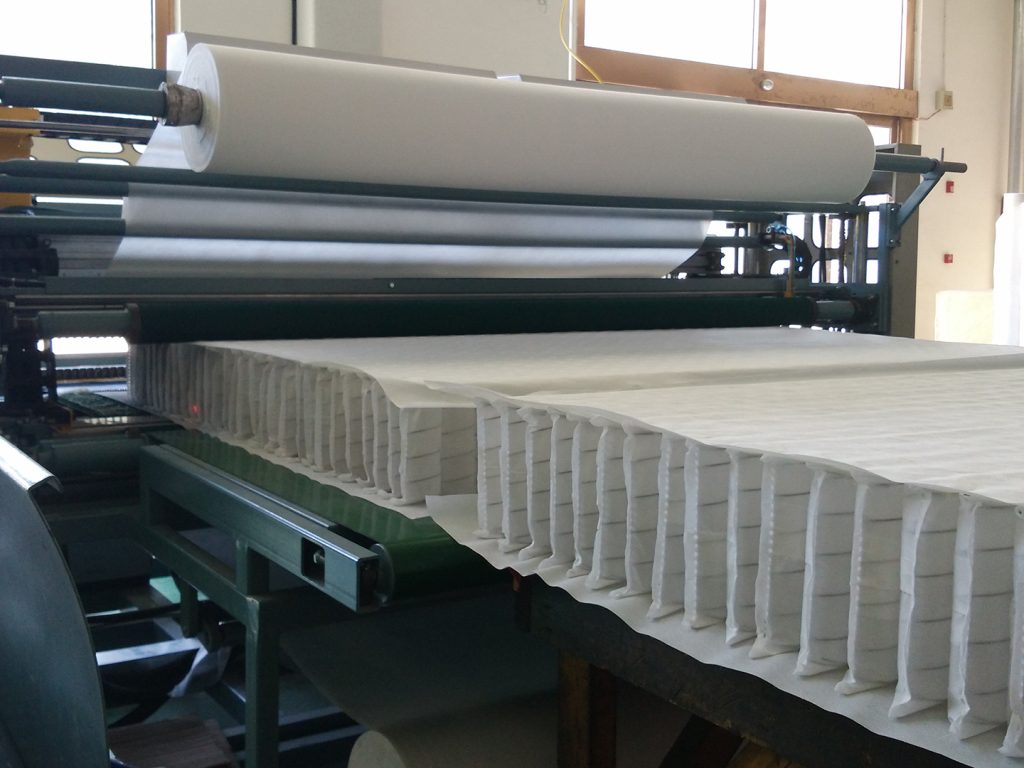
| One supplier across several constructions | Spring, pocket spring, hybrid, memory foam, high-density foam and orthopaedic foam mattresses |
| Stock through peak trading | Capacity of 500,000+ mattresses a year for bulk and repeat orders. |
| Consistent batches | 100% QC inspection, with products checked before loading |
| Lower freight cost per unit | Compression, cartoning and optimised container loading |
| Answers for ethical sourcing questionnaires | OEKO-TEX and BSCI credentials |
| A way to meet the factory team | Regular exhibitor at CIFF Guangzhou since 2015, including 2026 |
How a UK Private Label Mattress Launch Runs
- Write the brief. Define the channel, hazard category, UK sizes and target retail price.
- Develop the specification. Fix the layers, firmness, cover and branding.
- Verify the construction. Work through the seven checks above on the final specification, not an earlier sample.
- Cost the landed price. Include freight, duty, VAT, testing, UK storage and delivery. Confirm the commodity code with your customs broker.
- Place a pilot order. Check the arrival condition, packaging and customer feedback before scaling.
- Scale and repeat. Move to container quantities and keep the repeat testing plan running.
 Common Questions
UK Mattress Manufacturer FAQs
Who are the main mattress manufacturers in the UK?
The NBF manufacturer directory is the best starting point. Its members include Harrison Spinks, Relyon, Hypnos, Vispring, Millbrook, Silentnight and Sealy, and NBF members account for about 75% of UK bed and mattress turnover.
Is KaneMan a UK mattress manufacturer?
No. KaneMan is an export factory based in China that makes private label and OEM mattresses for brands, retailers, hotels and wholesalers. It is not an NBF member, and products made by KaneMan cannot carry a UK-made claim.
Do imported mattresses have to meet BS 7177?
Mattresses sold in the UK must meet the same fire safety requirements wherever they are made. Fillings must meet the 1988 regulations, and BS 7177 is the standard used to show the finished mattress is safe. Take advice on your specific duties as an importer.
Can a brand made overseas use the NBF logo?
Not as an NBF Brand Associate. That membership requires every mattress sold to UK and Irish retailers under the brand to be made by NBF Approved members.
What is the difference between a domestic and a contract mattress?
A domestic mattress is built to BS 7177 low hazard, covering cigarette and match ignition tests. Medium hazard adds the Source 5 test, or Crib 5, and is typical for hotels, halls of residence and similar premises.
What is the minimum order for a private label mattress?
KaneMan’s custom spring mattresses start at 100 units, with the best unit cost at container-load quantities. Send your construction for confirmation on other mattress types.
Send Your Spec and Get a Straight Answer
Tell us your channel, target hazard category, UK sizes and quantity. We will reply with what can be built, the price basis, and which evidence applies to your construction.
Request a UK Private Label Quote